
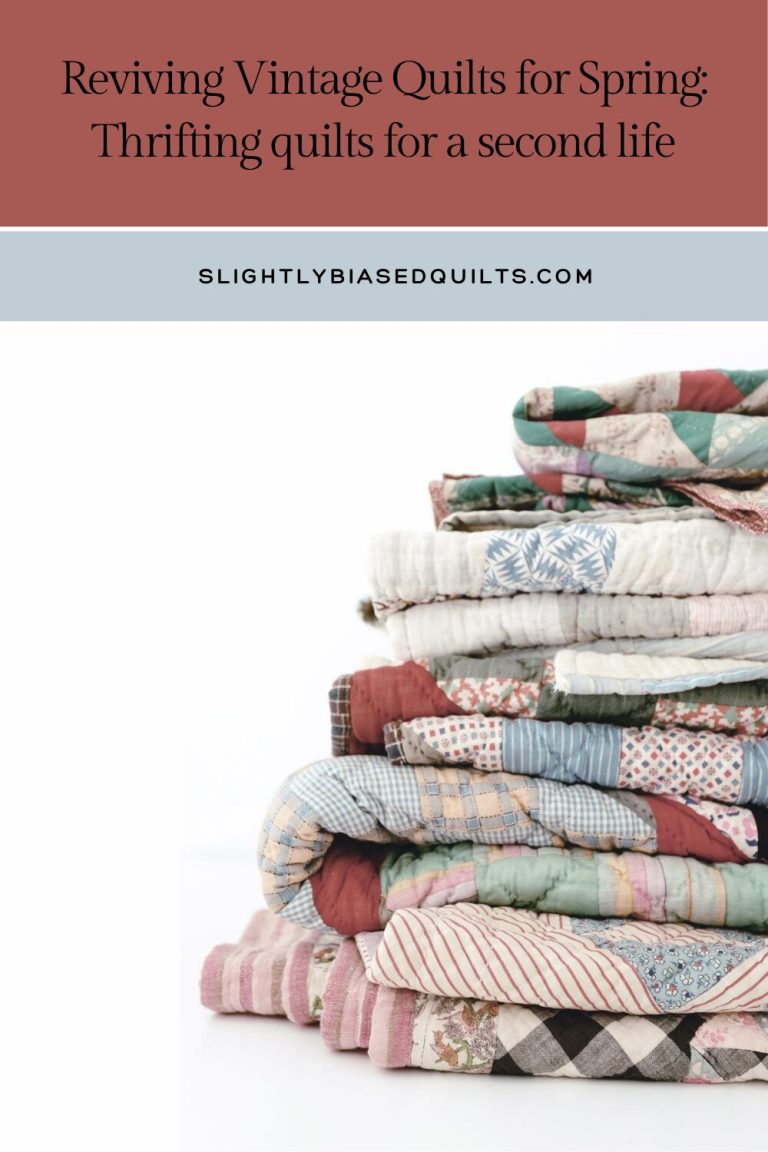
There’s something about spring that makes us want to freshen up every corner of our homes—and for quilters, that often means pulling out lighter fabrics, softer colors, and maybe even starting something new. But what if, instead of beginning from scratch, we looked backward for inspiration?
Vintage quilts—found tucked away on thrift store shelves, folded into antique mall booths, or draped quietly over estate sale bins—hold stories in every stitch. And with a little care and creativity, they can be given a beautiful second life.
The Charm of a Well-Loved Quilt
There’s a softness to vintage quilts that simply can’t be replicated. Years of use have worn the fibers into something buttery and familiar. The colors may be faded, the seams a little fragile—but that’s part of the magic.
These quilts were made to be used, loved, and lived with. And when we find them today, we’re stepping into a long line of caretakers. There’s something deeply meaningful about continuing that story rather than letting it fade away on a forgotten shelf.
What to Look for When Thrifting Quilts
Not every vintage quilt is destined for the same future—and that’s okay. The key is learning how to spot potential.
When you’re browsing, pay attention to:
- Overall structure: Are the seams intact? Is the quilt top holding together?
- Fabric strength: Some areas (especially light prints) may be more worn than others
- Stains or discoloration: Many can be improved, but it’s good to know what you’re working with
- Hand quilting details: Even if a quilt is too fragile to use whole, those stitches are worth saving
If a quilt is in excellent condition, you may choose to preserve it as-is. But if it’s worn or damaged, that’s where the creative possibilities really begin.
Giving Vintage Quilts a Second Life
This is where spring energy meets quilting imagination.
A quilt that’s too fragile for a bed can still shine in smaller, functional pieces:
- Pillows that highlight the most beautiful sections
- Tote bags that carry history into everyday errands
- Table runners or toppers for seasonal decorating
- Quilt coats (a favorite for adding personality to your wardrobe)
There’s no single “right” way to repurpose a quilt—only thoughtful ones. I like to think of it as editing rather than cutting. You’re preserving the best parts and letting them live on in a new form.
A Gentle Approach to Restoration
Sometimes a quilt doesn’t need to be reinvented—it just needs a little care.
Try:
- A gentle soak in cool water with mild detergent
- Air drying (preferably flat or supported)
- Simple hand repairs to stabilize seams or reinforce weak spots
Even small efforts can bring a quilt back to life just in time for spring use—draped over a porch chair, spread across a guest bed, or folded at the foot of your own.
Stitching Past and Present Together
There’s a quiet kind of sustainability in reviving vintage quilts. It’s not just about reducing waste—it’s about honoring the hands that came before us while making something meaningful for today.
As quilters, we understand the time, intention, and care that goes into every piece. Choosing to thrift and revive a quilt is a way of saying: this still matters.
And maybe that’s what spring is really about—not just new beginnings, but gentle renewals.
If you’ve ever brought a vintage quilt home or transformed one into something new, I’d love to hear your story. There’s always room for one more chapter in a quilt’s life—and I have a feeling yours is a beautiful one.
Ha, just so happens this week a friend asked me to repair her 25 yr. old quilt that has been used and is from a time she and her husband visited Hiwaii. A beautiful tropical picture, all pastels and one end totally frayed. I am choosing to replace that end with a fabric binding that would blend with colors and not take away from the all over picture. I will show her the comments for giving a vintage quilt a second life before doing anything on it this week. This article was certainly providental for me. Thanks