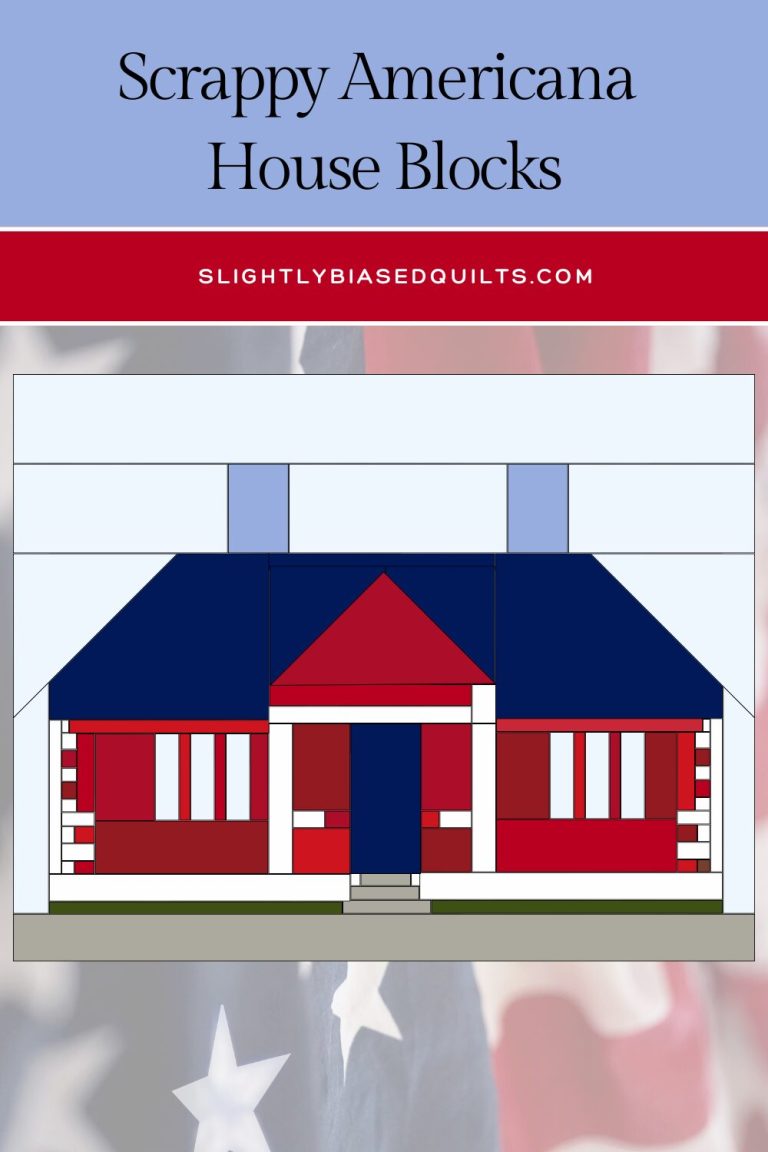
There’s something undeniably comforting about a quilt made of little houses.
Maybe it’s the symbolism—home, belonging, the places we gather and grow. Or maybe it’s the charm of each block feeling like its own tiny world. Either way, when you combine that motif with a scrappy red, white, and blue palette, you get something that feels both nostalgic and deeply personal.
Today, let’s talk about Scrappy Americana House Blocks—a quilt style that blends storytelling, tradition, and just the right amount of playful imperfection.
Making House Blocks Feel Meaningful
House quilts have been around for generations, often representing more than just architecture.
They can symbolize:
- A family home or childhood memory
- A sense of community
- A place of comfort and gathering
When stitched together, a quilt of houses becomes a neighborhood of sorts—each block slightly different, yet part of a cohesive whole. Pair that with an Americana palette, and it starts to feel like a quiet tribute to home in a broader sense.
The Beauty of Scrappy
Scrappy quilts are where personality really shines.
Instead of working from a tightly curated fabric pull, you’re reaching into your stash—pulling bits and pieces that might not “match” in the traditional sense but come together in a way that feels layered and lived-in.
For a scrappy Americana look, consider:
- A range of reds—from deep barn red to soft coral
- Blues that vary from navy to chambray
- Low-volume whites and creams for balance
The variation is what gives the quilt its charm. It shouldn’t feel overly planned—it should feel collected.
Designing Your House Blocks
One of the best things about house blocks is how adaptable they are.
You can keep things simple:
- A square body
- A triangle roof
- A small rectangle for a door
Or add a bit more personality:
- Tiny window details
- Offset doors
- Patchwork roofs
- Chimneys for a whimsical touch
No two houses need to be the same—in fact, it’s better if they aren’t.
✏️ How to Draft Your Own House Quilt Block
Designing your own house block from scratch is much simpler than it looks. Think of it as building with basic shapes. Start with a picture of a house that you loved and the block is sure to bring you some joy.
1. Start with the Body
Decide how tall and wide you want your house to be.
A good starting point is a simple rectangle or square. For example:
- 4″ x 6″ for a tall house
- 5″ x 5″ for a balanced cottage-style block
This becomes the “foundation” of your design.
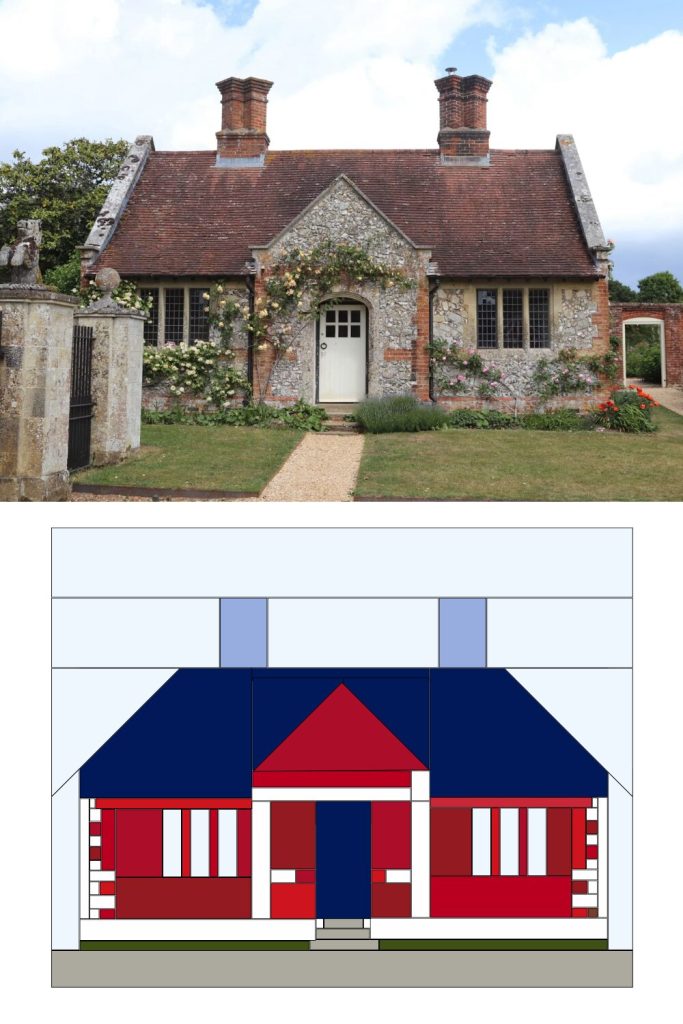
2. Add the Roof Shape
The roof is usually a triangle or a simple peaked shape.
To draft it:
- Draw a square or rectangle equal to your house width
- Add a centered triangle on top
- The height of the triangle determines how “steep” your roof looks
A shallow triangle gives a cozy cottage feel, while a taller one feels more dramatic.
Pro-tip: Grid paper can really help with the math of the pieces.
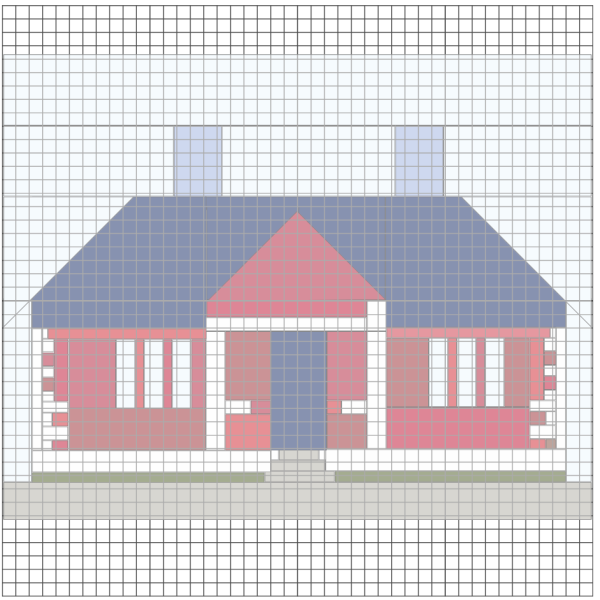
3. Divide Into Pieces (Optional but Fun)
Once your basic silhouette is drawn, decide if you want to break it into patchwork pieces:
- Split the roof into two fabrics for a scrappy look
- Divide the house body into “siding boards” using strips
- Add a contrasting door rectangle
- Insert tiny square or half-square triangle windows
This is where personality really starts to show.
4. Add Seam Allowances
Once you’re happy with your drawing:
- Add ¼” seam allowance around each piece
- Or redraw the entire block on grid paper including seam lines
This step turns your sketch into a workable pattern.
5. Simplify When Needed
A good rule of thumb: if it feels too complicated to sew, simplify the shapes.
House blocks are incredibly forgiving—clean shapes often read better than overly detailed ones once quilted.
Playing with Layout
Once you’ve made a handful of house blocks, the layout becomes part of the storytelling.
🏡 Straight Rows
A classic grid creates a tidy, village-like feel.
🌿 Offset or Staggered Layout
This gives a more organic, neighborhood vibe—less structured, more relaxed.
⭐ Adding Sashing
Sashing can act like “streets” between the houses, especially in a soft neutral or low-volume print.
🧵 Negative Space
Letting your houses float on a light background can make each block stand out while keeping the quilt from feeling too busy.
Bringing in That Americana Feel
Americana quilts don’t have to be bold or overly themed. In fact, a softer approach often feels more timeless:
- Use slightly muted or dusty tones instead of bright primaries
- Mix in subtle prints like stripes, ginghams, or tiny florals
- Incorporate wovens for that textured, homespun look
The goal is a palette that feels warm and familiar—like something that could have been passed down.
Quilting Ideas to Tie It All Together
The quilting design can add another layer of charm to your house blocks.
Consider:
- Straight-line quilting to keep things crisp and simple
- Gentle waves to add movement (almost like a summer breeze)
- Outline quilting around each house to make them pop
- Or, if you’re feeling playful, vary the quilting slightly from block to block—echoing the individuality of each “home.”
A Quilt Full of Stories
What makes scrappy Americana house quilts so special is that they rarely feel like just a project.
They feel like a collection of moments:
- Fabrics from past quilts
- Colors that remind you of a season or place
- Little design choices made on instinct
Each house becomes a piece of that story.
Let It Be Imperfect
If there’s one thing to embrace with this kind of quilt, it’s imperfection.
Your seams might not all line up perfectly. Your fabric choices might surprise you. Some houses might lean a little to one side.
That’s part of the charm.
A scrappy house quilt isn’t about precision—it’s about warmth, character, and creating something that feels like home.
Scrappy Americana house blocks are a beautiful reminder of why we quilt in the first place.
They’re approachable, meaningful, and endlessly customizable. Whether you make a full quilt, a wall hanging, or just a few blocks to start, this style invites you to use what you have and tell your story—one little house at a time.
And honestly, there’s something really special about that.