
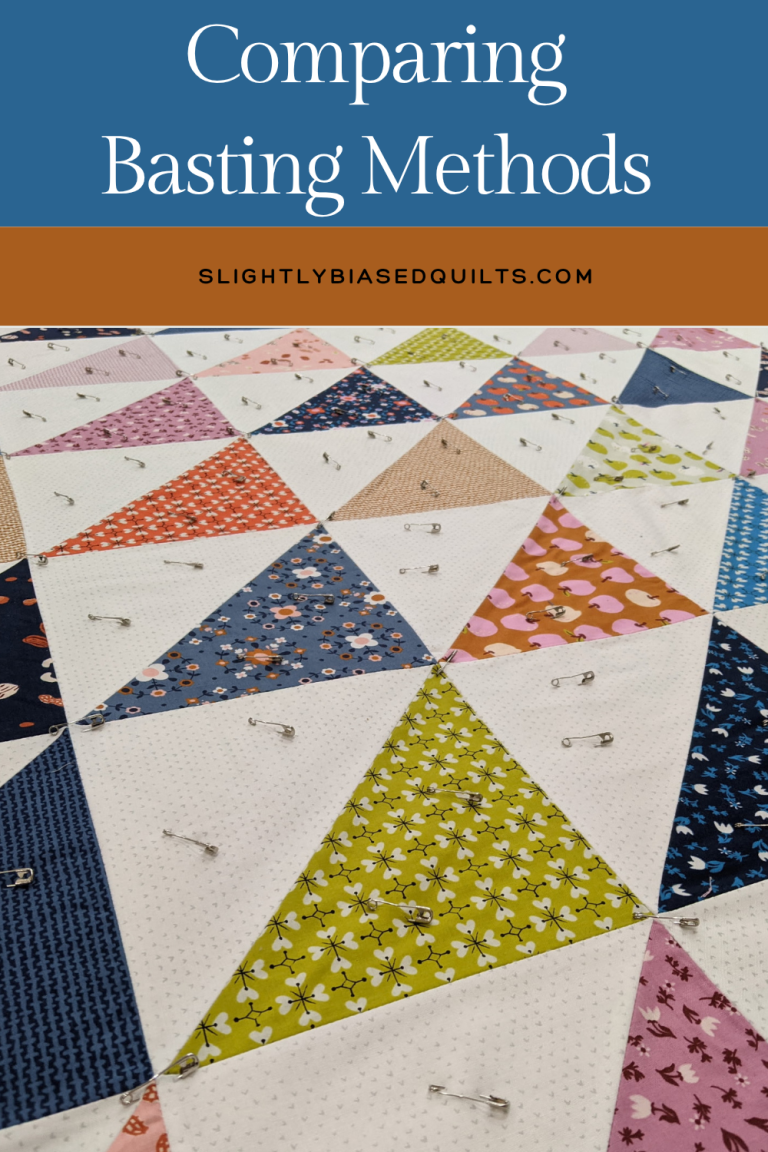
Glue basting vs. thread basting vs. Pin basting.
Today we are tackling the step every quilter loves to hate: basting. Getting your quilt top, batting, and backing sandwiched smoothly is critical for a pucker-free finish, but the methods to get there are hotly debated.
Pin Basting: The Traditional Standby
Curved safety pins are a staple in almost every quilter’s toolkit. By pinning every few inches across the quilt sandwich, you physically lock the layers together. This method is incredibly reliable, and once you invest in a good set of curved pins, you rarely have to buy basting supplies again. The major downside is the physical toll. Crawling around on the floor to close hundreds of pins can leave your knees aching and your fingertips raw. Plus, you have to constantly stop and remove pins while machine quilting to avoid striking them with your needle.
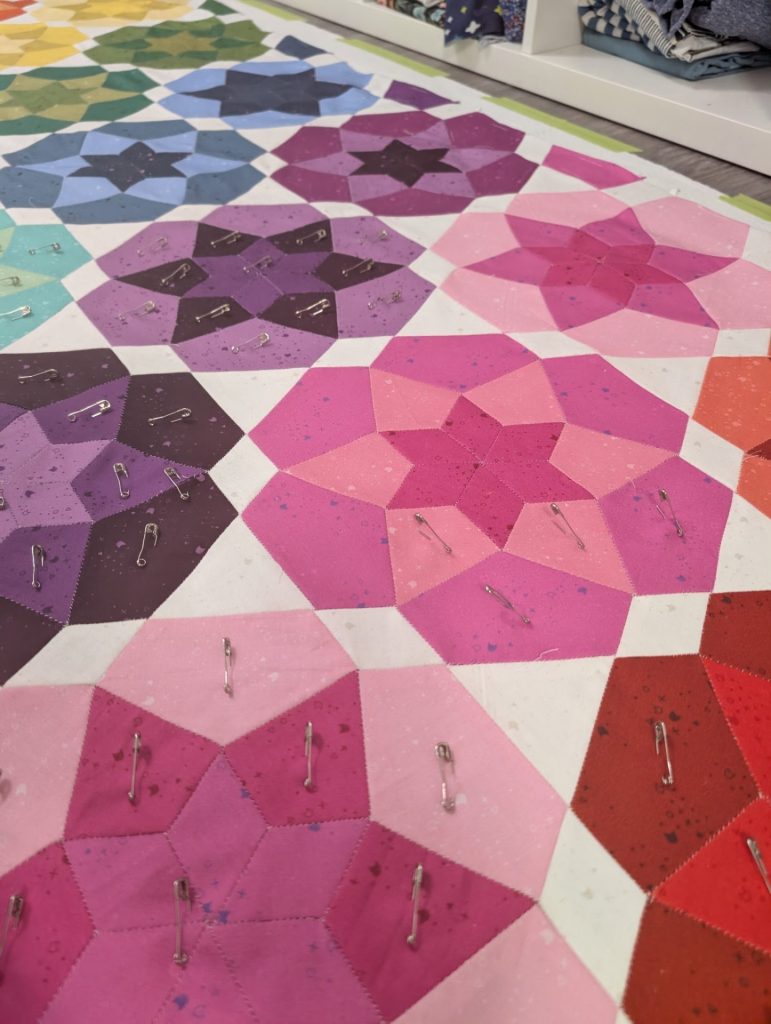
Glue & Spray Basting: The Speedy Modern Route
Temporary fabric adhesive—either aerosol spray or liquid washaway glue—has revolutionized the basting process. You simply adhere the layers together, creating a perfectly flat, pin-free sandwich. Machine quilting becomes a breeze because there is absolutely nothing in your way, making this a favorite for complex free-motion quilting. However, aerosol sprays require excellent ventilation and can leave a sticky overspray on your floors or tables. Both spray and liquid options mean continually buying consumable products, and applying too much adhesive can sometimes gum up your sewing machine needle.
Thread Basting: The Heirloom Approach
Before pins and sprays, there was thread. Taking a long needle and running large, sweeping stitches grid-style across the quilt holds the layers beautifully without adding any weight or stiffness. It is the absolute gold standard if you plan to hand-quilt, as there is no hardware to snag your working thread, and the quilt remains incredibly soft and drapeable in your lap. The trade-off is time. It takes significantly longer to thread baste a large quilt than to spray or pin it, and you still have to pluck out all those basting stitches once the final quilting is complete.
Whether you prefer the reliability of pins, the speed of spray, or the tradition of thread, the best basting method is simply the one that gets your quilt out of the WIP pile and under the needle.