
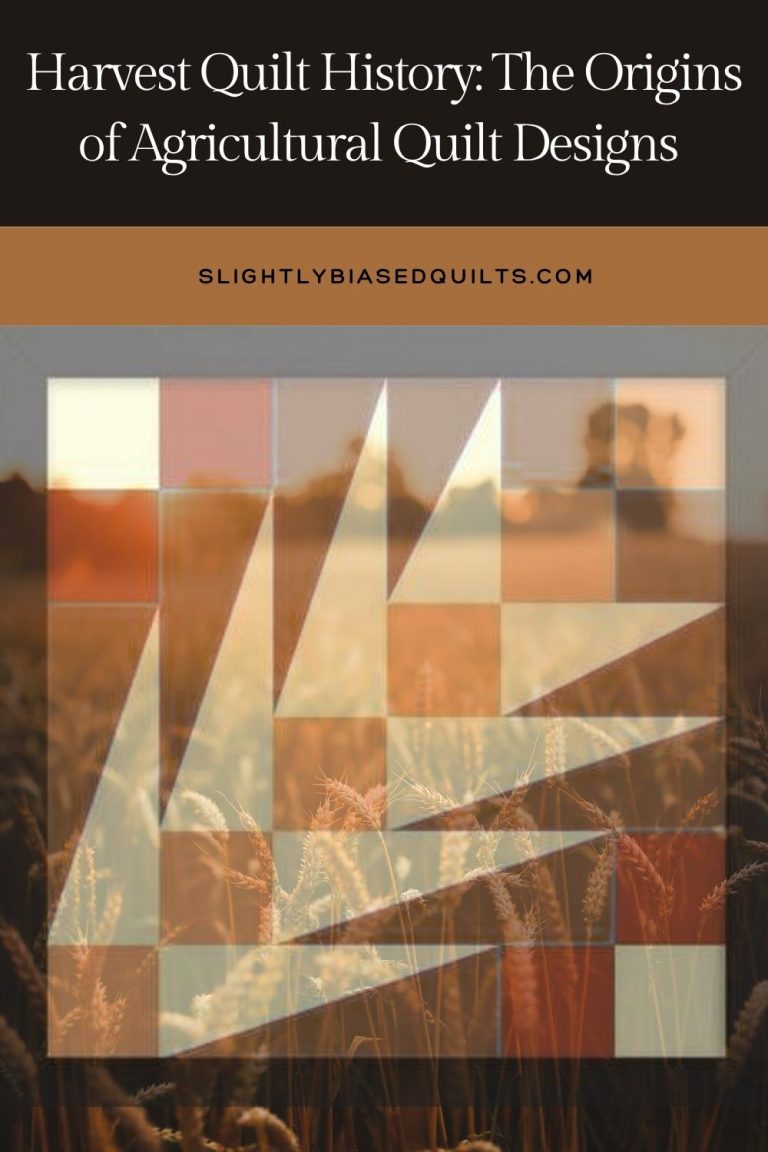
Step into the rich heritage of American craft as we explore the stories behind classic agricultural quilt patterns. From the repeating geometric rhythm of Corn & Beans and the elegant symmetry of Wheat to the rustic charm of Haystacks, traditional farm-life blocks carry deep roots in pioneer history and seasonal folklore. In this post, we journey back to the origins of these beloved designs—including additional favorites like Turkey Tracks and Churn Dash—uncovering how rural quiltmakers transformed daily farm chores and harvesting traditions into enduring textile art.
Threading the Past: How Farm Life Shaped the Quilt Block
In the 18th and 19th centuries, quilting in agrarian America was far more than an artistic pursuit; it was a matter of household utility, resourcefulness, and community bond. Pioneer women spent long, demanding days working alongside their families—tending crops, preserving harvests, and caring for livestock.
When evening arrived, or during the long winter months after the final harvest, women turned to the sewing needle. Fabric was often salvaged from worn-out farm clothes, grain sacks, and flour bags. In creating geometric patterns, quiltmakers drew direct inspiration from the world outside their windows. The visual rhythm of ploughed fields, the shape of gathered crops, and the familiar tools of the homestead provided a canvas for storytelling. Through simple triangles, squares, and diamonds, everyday agricultural realities were transformed into heirloom textile art.
Classic Harvest & Crop Patterns
Corn & Beans
Few patterns capture the essence of agrarian life quite like Corn & Beans. Originating in the early-to-mid 19th century, this block relies on a clever arrangement of half-square triangles and flying geese elements that create a sense of sprouting growth and repeating rows.
- The Historical Connection: Corn and beans were staple crops planted together in traditional companion planting techniques (often referred to in Indigenous and early American farming as part of the “Three Sisters” method). The design reflects the alternating visual rhythm of crops planted in long, precise field rows.
- Visual Signature: Strong directional lines and contrasting colors that mimic green shoots emerging from dark, fertile soil.

Wheat (and Sheaves of Wheat)
Wheat has symbolized prosperity, bounty, and divine blessing across cultures for centuries, and American quiltmakers embraced this motif with artistic devotion. The Wheat block (often seen as a stylized “Sheaf of Wheat”) uses delicate piecing or applique to form radiating stalks tied in the center.
- The Harvest Folkloric Root: Before modern combine harvesters, wheat was cut by hand and bound into golden sheaves left to dry in the fields. Completing the wheat harvest marked the peak of the farming calendar and meant winter food security.
- Design Evolution: Quiltmakers often rendered this block using warm yellows, ambers, and warm browns, making it a favorite for autumn bed coverings and harvest celebration gifts.
Haystacks
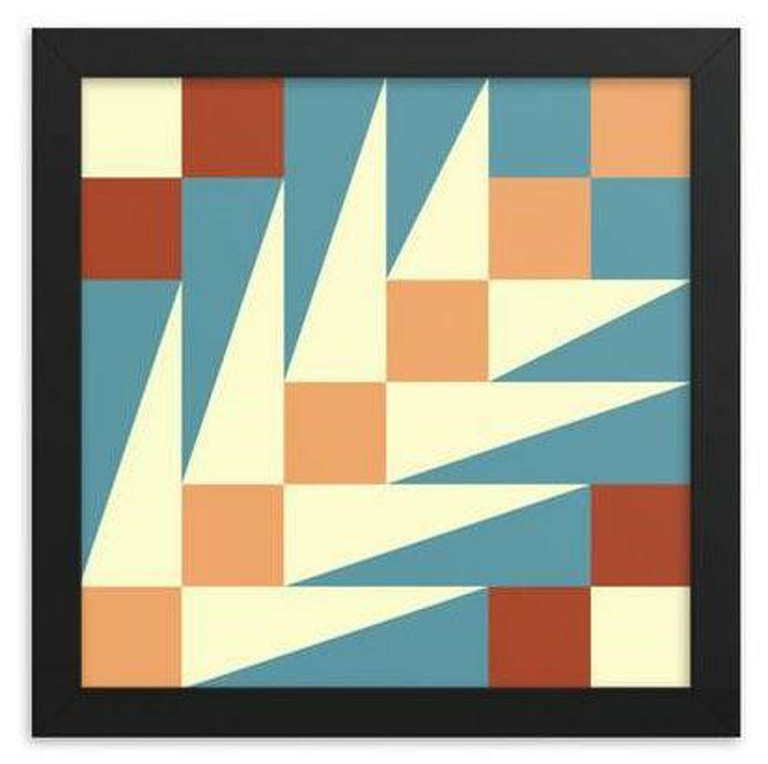
The Haystacks block offers a rustic, geometric representation of gathered field forage. Long before modern balers, hay was meticulously piled into large cone-shaped or rounded mounds in the fields to cure and protect it from rain.
- Pioneer Practice: Haying was one of the most labor-intensive events of late summer. Entire families and neighbors rallied to clear fields before seasonal storms hit.
- Artistic Translation: The block features layered trapezoids or stacked triangles, creating a solid, three-dimensional illusion of stacked forage rising against the horizon.
Farmstead Tools & Daily Life on the Homestead
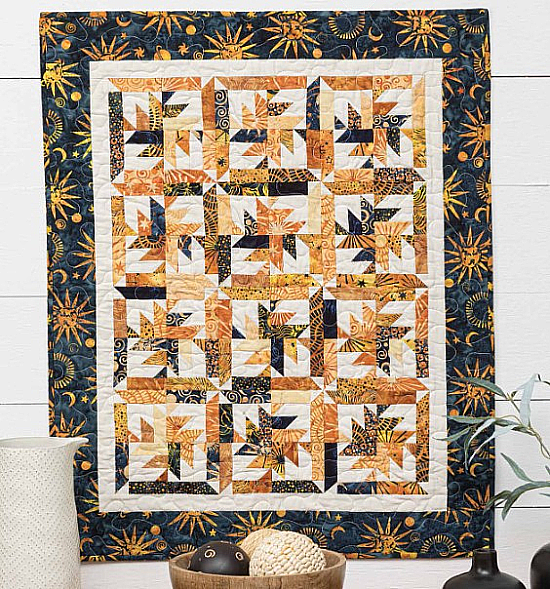
Agricultural quilt history extends beyond crops to include the daily chores, livestock, and essential equipment that kept early American homesteads running.
Churn Dash
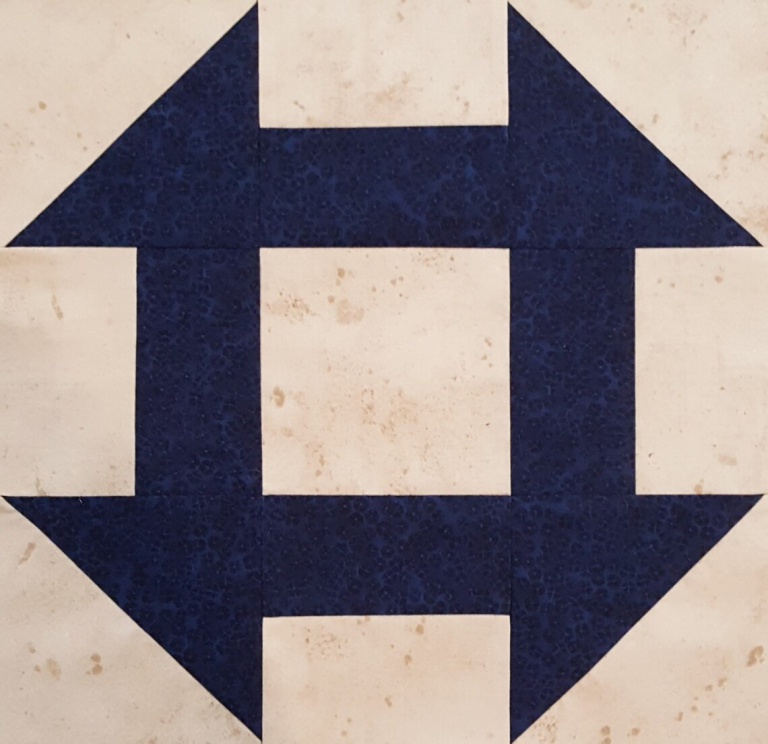
Perhaps one of the most recognizable and beloved blocks in quilt history, the Churn Dash (also known in regional variations as Hole in the Barn Door or Butter Churn) dates back to the early 1800s.
- The Chore Behind the Name: Butter making was a daily or weekly chore primarily managed by women and children. The pattern mimics the outer wooden frame of the butter churn and the central plunger (the “dash”) used to transform cream into butter.
- Why It Endured: With its balanced nine-patch construction using simple squares and half-square triangles, it was ideal for utilizing small scrap fabric while offering crisp visual symmetry.
Turkey Tracks
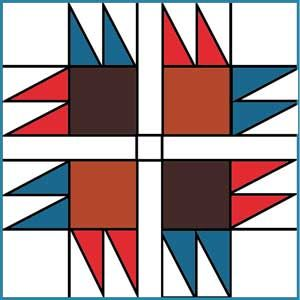
Wildlife and livestock naturally crept into quilt naming conventions as quilters observed the land around them. Turkey Tracks (sometimes called Wandering Foot) features distinctive angled toes extending from a central axis.
- Rural Lore & Superstition: Turkeys—both wild and domesticated—were a vital food source and a ubiquitous sight on rural homesteads. However, the pattern carried a bit of folklore: in some 19th-century communities, superstitious quilters avoided making a Wandering Foot quilt for a young man, fearing it would give him “itchy feet” and cause him to abandon the family farm!
- Technical Mastery: Featuring angled points and curved piecing or appliqué, stitching a clean Turkey Tracks block was often considered a mark of an experienced seamstress.
Preserving the Legacy of Agricultural Quilt Art
The quilt blocks born on early American farms were never just geometric exercises—they were visual records of seasonal rhythms, hard work, and gratitude for nature’s yield. Every stitch held a memory of field prep, summer sun, and autumn harvest.
Today, contemporary quilters continue to honor this heritage by recreating these classic patterns in both traditional feedsack reproduction prints and bold, modern colorways. The next time you piece a Churn Dash or lay out a Corn & Beans quilt top, you are connecting across generations to the pioneer makers who stitched their agrarian lives into everlasting textile art.