There is something undeniably soothing about a quilt that feels as though it has been passed down through generations. That soft, lived-in warmth, the aged color palette, and the gentle texture of big-stitch quilting all combine to evoke a sense of history, comfort, and home.
Achieving a genuine primitive aesthetic does not require waiting fifty years for your cottons to naturally fade. By combining historical reproduction prints with relaxed hand-stitching techniques, you can create a rustic heirloom that carries the soul of antique handwork in a fraction of the time.
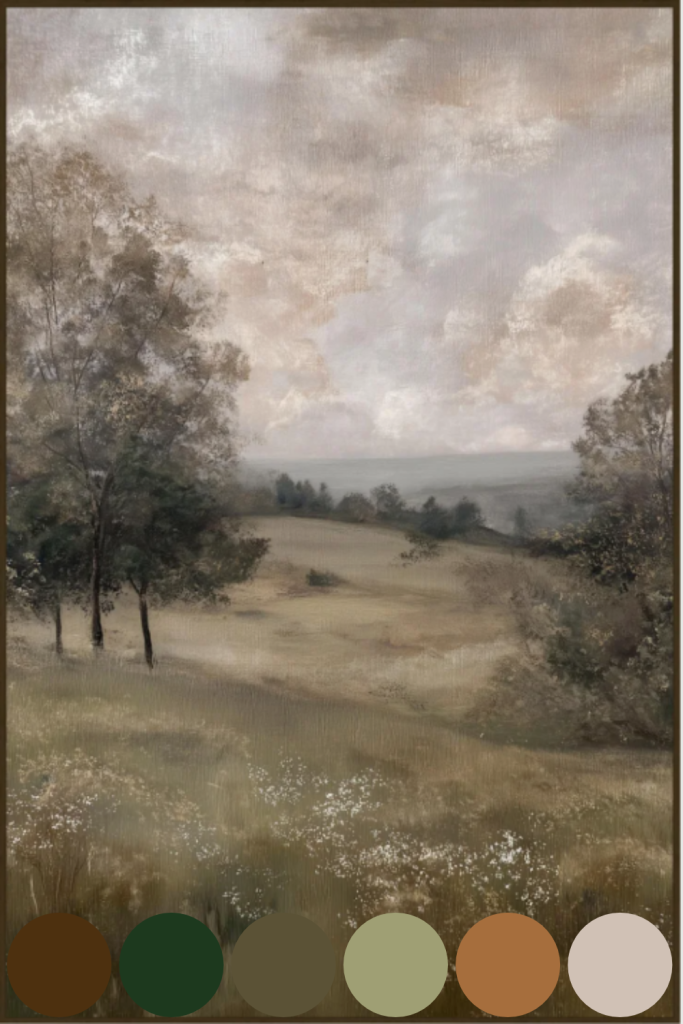
Pulling inspiration from a misty countryside is a great place to start.
Building a Primitive Color Palette
The foundation of any primitive quilt lies in its color story. Antique quilts owe their distinctive look to the natural dyes of the 19th century—dyes that aged into rich, mellow tones over decades of use and washing.
To recreate that vintage depth, look for reproduction print collections featuring specific historic color families:
Warm Neutrals: Swap out stark, bright whites for aged creams, parchment, and warm oatmeal tones. Fabrics with a tea-dyed or aged background instantly strip away the harsh contrast of modern cottons.
Deep Indigo Navy & Slate: Indigo was a staple of historical textile production. Dark navy and deep slate blues anchor your block piecing and add strong visual structure.
Rich Burgundy & Barn Red: Deep, earthy reds bring warmth to your layout without overpowering neighboring prints. Look for muted cranberry tones.
Earthy Terracotta, Mustard, & Sage: Grounding accent colors like warm nutmeg, dark mustard yellow, and dusty eucalyptus green draw the entire palette together, capturing the cozy essence of early American utility quilts.
Choosing the Right Reproduction Prints
Primitive style thrives on texture-heavy visual variety. Rather than using crisp, high-contrast modern prints, build your fabric pull with small-scale prints that soften the overall design.
Seek out Civil War and 19th-century reproduction lines featuring small calico florals, subtle shirtings, delicate pin-dots, fine stripes, and traditional paisley motifs. Mixing multiple small-scale prints within a single block gives the illusion that your quilt was lovingly pieced from scrap baskets gathered over many years.
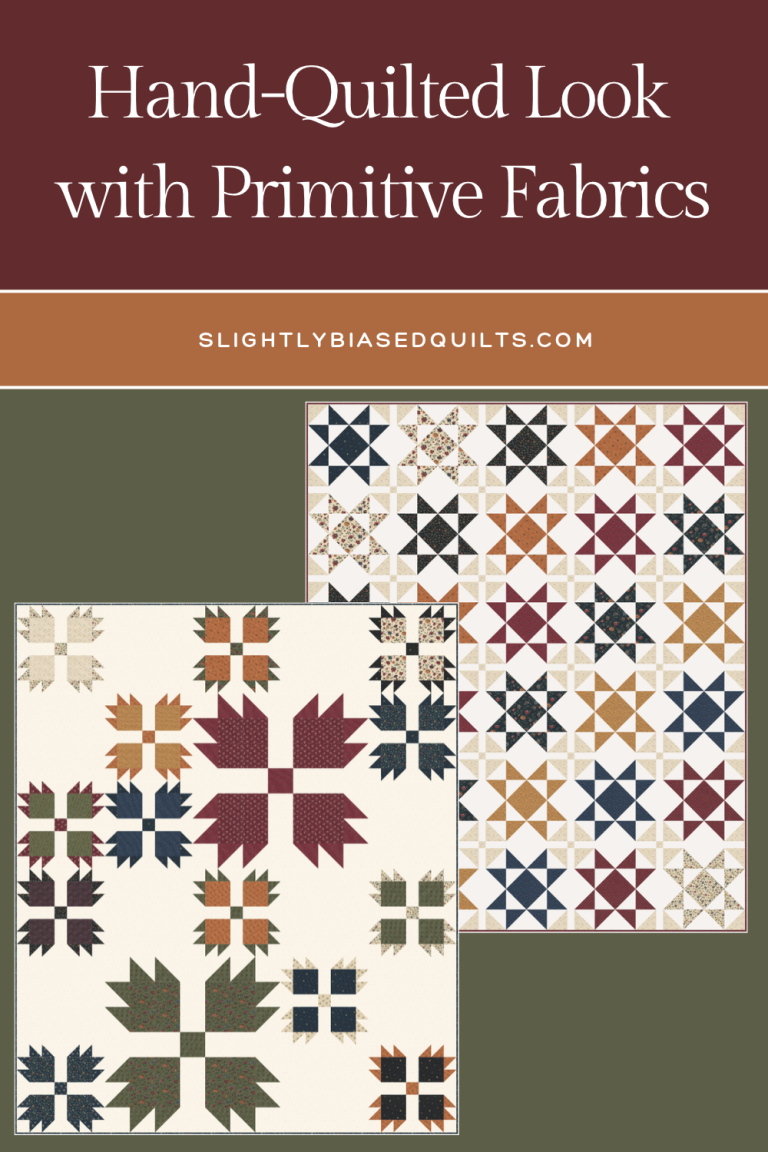
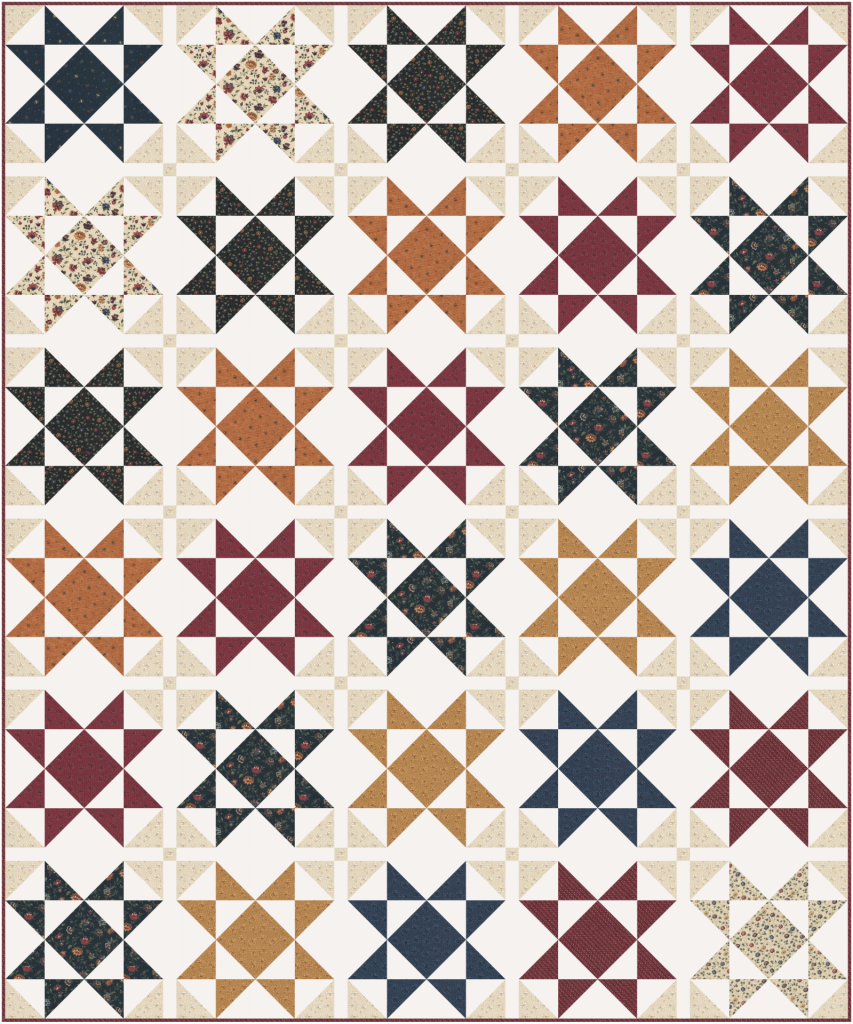
The Luster pattern looks great in primitive prints
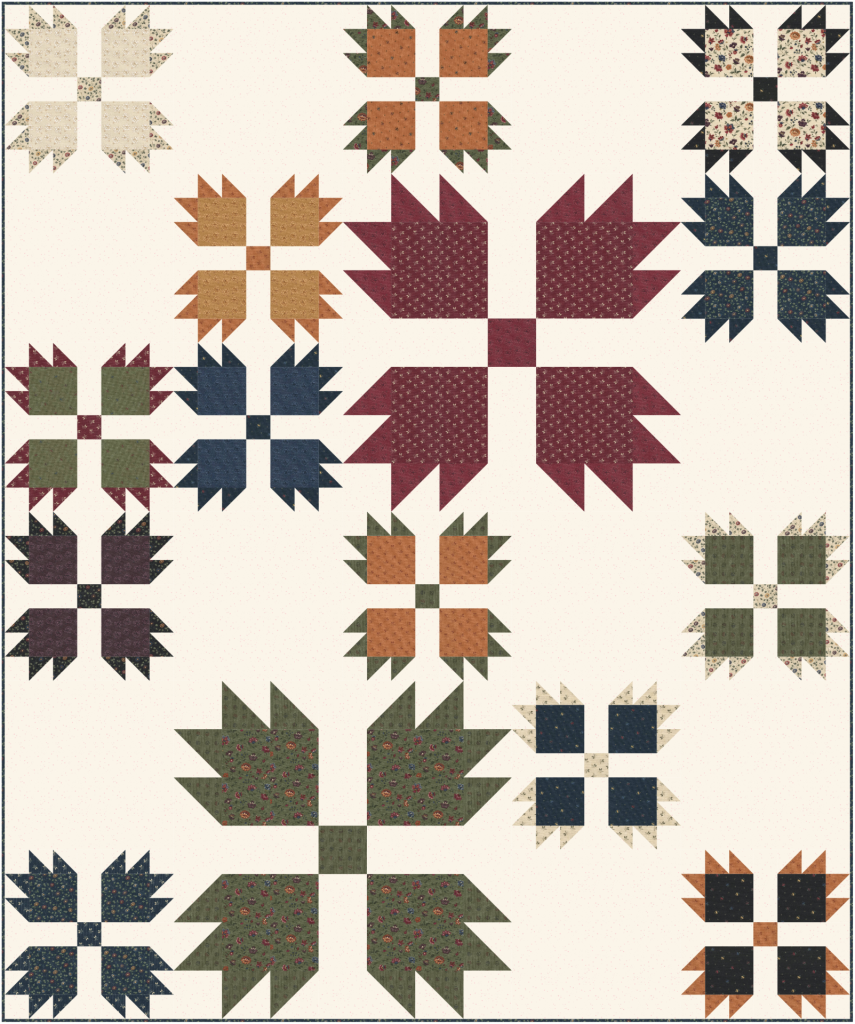
Wild Tracks is another great example of a pattern that lends itself well to a primitive palette.
Adding Heart & Texture with Big-Stitch Hand Quilting
While machine piecing gives you a strong, accurate foundation quickly, nothing delivers antique character quite like hand stitching. Big-stitch quilting—using heavier thread and visible running stitches—adds an irreplaceable tactile softness.
Select a Heavier Thread: Skip standard fine quilting thread in favor of a #8 or #12 perle cotton or two strands of cotton embroidery floss in warm cream, tan, or antique brass.
Embrace Big, Relaxed Stitches: Rather than aiming for tiny, microscopic stitches, aim for consistent, visible running stitches roughly ⅛” to ¼” long. The larger stitch size showcases the thread beautifully and allows you to finish quilting a lap or throw quilt in a fraction of the traditional timeframe.
Quilt in Utility Patterns: Simple straight lines, gentle orange peel curves, or outline stitching inside pieced blocks mirror the functional, unpretentious quilting styles of early home-makers.
Crinkling & Finishing for Instant Vintage Charm
Once your binding is secured, the final magic trick happens in the wash.
Wash your finished quilt in cool water and tumble dry on medium heat. As the cotton batting shrinks slightly beneath your hand-stitched lines, the fabric will pucker into iconic, crinkly ridges. The result is a wonderfully weighted, ultra-cozy quilt that looks and feels like a cherished family treasure from day one.