
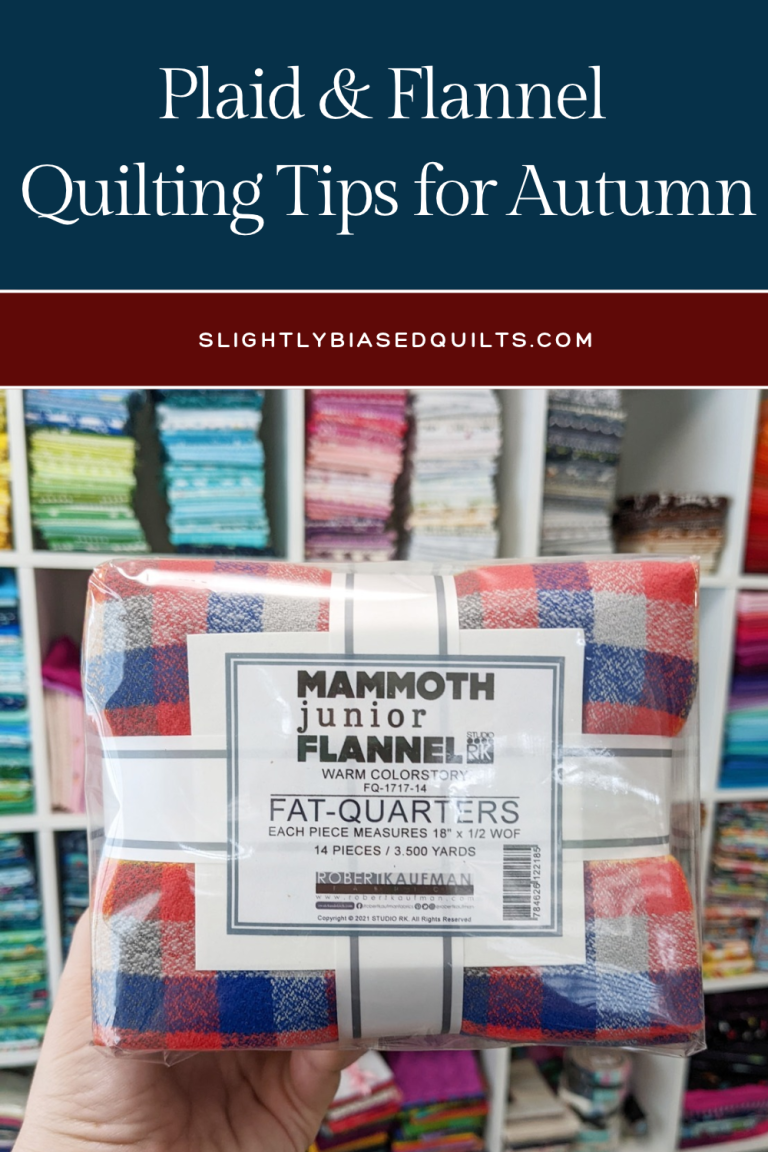
Flannel and plaid bring an unbeatable tactile warmth and rustic charm to fall quilting, but their loose weaves require a few deliberate adjustments at the sewing machine. Because flannel fibers are brushed for softness, the fabric tends to stretch, fray, and shift far more than standard quilt-shop cottons.
Whether you are pulling rich copper, midnight navy, and dusty eucalyptus tones from your stash or piecing a classic block pattern for crisp weather, here is how to master flannels and plaids for seamless, heirloom-quality results.
Tame the Stretch with Starch & Sharp Tools
Flannel has a looser, more pliable weave than traditional quilting cotton. Without proper stabilization, bias edges will stretch out of shape during piecing.
- Starch is Non-Negotiable: Spray and press your flannel with starch or fabric finish before cutting. Starching helps lock the loose weave into place, giving the fabric a crisp, paper-like hand that prevents distortion along cut edges.
- Switch to a Microtex or Denim Needle: Standard universal needles can push loose flannel threads into the throat plate or produce skipped stitches. A SHARP Microtex (size 80/12 or 90/14) or a dedicated Denim needle pierces thick, brushed layers cleanly.
- Lengthen Your Stitch Slightly: Increase your stitch length from a standard 2.0 mm to 2.5 mm – 2.8 mm. The extra bulk of flannel requires a bit more thread clearance, preventing seam pucker and puckered joins.
Master Plaid Alignment & Match Points
Directional plaids make visually striking quilts, but misaligned gridlines can disrupt the flow of your blocks.
- Pin Perpendicular to the Seam: When joining plaid strips or blocks, line up the horizontal and vertical color bars exactly. Insert fine glass-head pins perpendicular to the seam directly through the matching color intersections on both top and bottom layers.
- Use a Walking Foot for Piecing: A dual-feed or walking foot ensures that both layers of flannel move through the feed dogs at the exact same rate, stopping the top layer from slipping forward and throwing off your plaid match points.
- Embrace Generous Seam Allowances: If a block requires intensive sub-cutting or nesting, consider working with a generous 14“-wide seam to prevent fraying at point intersections. Press seams open to reduce bulk where multiple plaid corners meet.
Balance Bold Patterns with Grounding Textiles
Plaid prints carry high visual texture. To keep your design from feeling overly busy, strategic fabric pairing is key.
|
Design Element |
Strategy |
Why It Works |
|
Grounding Solids |
Pair busy plaid blocks with solid flannels, linen blends, or deep velvet accents. |
Gives the eye a place to rest and frames the intricate geometry of your piecing. |
|
Color Story |
Pull rich autumn palettes—bordeaux maroon, terracotta, midnight navy, and sage greens. |
Ties disparate plaid scale patterns together under a single cohesive theme. |
Pressing for Flat, Cozy Seams
The brushed nap of flannel creates bulk at every seam intersection, which can cause pieced blocks to wobble if pressed improperly.
- Press, Don’t Iron: Never slide the iron back and forth across flannel, as heat combined with lateral motion will warp the loose weave. Lift the iron completely, place it down onto the seam, apply firm downward pressure, and lift back up.
- Use a Tailor’s Clapper: Immediately after applying heat and steam to a pressed seam, place a wooden tailor’s clapper over the fabric for several seconds. The wood absorbs heat and moisture, trapping the seam completely flat without flattening the natural softness of the flannel nap.